


How much is okay?
Shave a fingernail cube—not a slice off the charcuterie board.
Rule of thumb: treats of all kinds should stay under ~10% of daily calories.
How to prepare them
- Use plain cheddar—no beer cheese, smoke flavor, or chili coatings.
- Avoid processed cheese spreads with extra salt and phosphates.
- Introduce once; stop if stool softens or gas increases.
Risks & exceptions
- Salt and fat climb quickly with aged cheese.
- Lactose varies but upset stomachs still happen.
- Cheese boards often sit next to grapes and onions.
Cheddar is a tiny salty cube, not a training handful.
If they ate too many
A larger portion or the wrong preparation is most likely to cause trouble.
- Gas
- Soft stool
Call your vet / pet poison line if:
- Repeated vomiting after cheese
- Pancreatitis signs after fatty charcuterie night
Related foods
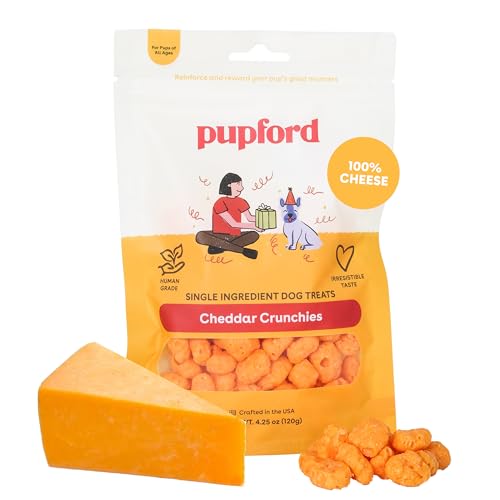
Pupford Cheese Crunchies, 1 Ingredient Dog & Puppy Treat…


FAQ
Is cheddar harder to digest than mozzarella?
Often yes—more salt and fat mean smaller portions.
Can dogs eat sharp cheddar?
Same tiny plain cube rule; sharper age usually means more salt.
Can dogs eat cheese crackers?
Skip crackers—salt and seasonings add up.
Affiliate disclosure: we may earn a commission from product links. Safety guidance is editorial and may change — verify with your veterinarian for your dog.