8 Cat Chew Treats
Updated Jul 28, 2026
Cat chew treats covers the gnaw-and-chew job—dental sticks, meaty sticks, and crunchy dental bites—broader than our dental cat treats guide, which ranks strictly by plaque-and-tartar clinical claims. This list is built around chew format and texture first, dental function second. Use the quiz for a quick match, or read the ranked write-ups.
Our top picks
Swipe →Compare the best cat chew treats
Side-by-side tradeoffs for this shortlist — texture, job fit, and how clean the bag reads. Same 8 picks; swipe sideways to compare.
| Pick |
#1 of 8
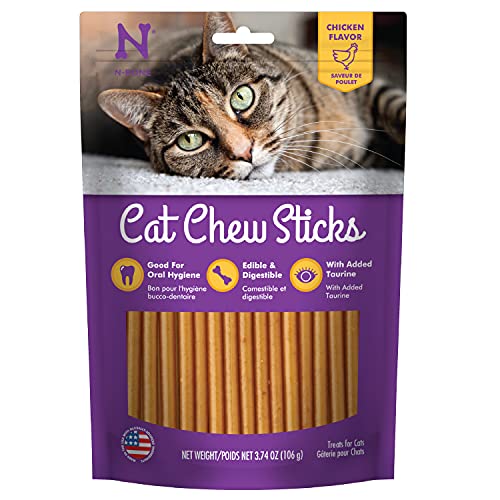
N-BoneCat Chew Treats, Purple (3.74 oz) |
#2 of 8

DentalifePurina DentaLife Made in USA Facilities Cat Dental Treats, Tasty Chicken F (19 oz) |
#3 of 8

GreeniesFeline Natural Dental Cat Treats, Roasted Chicken Flavor (9.75 oz) |
#4 of 8

ShebaMeaty Tender Sticks Cat Treats, Chicken, Salmon, & Tuna, 40 Count (4 oz) |
#5 of 8

VitakraftPurrSticks Meaty Cat Sticks - Chicken - Segmented and Breakable Meatstick (1.5 oz) |
#6 of 8

GreeniesFeline Natural Dental Cat Treats, Catnip Flavor (4.6 oz) |
#7 of 8

VirbacC.E.T. Intellident Cat Bites for Dental Care (3 oz) |
#8 of 8

DentalifePurina DentaLife Made in USA Facilities Cat Dental Treats, Savory Salmon F (19 oz) |
|---|---|---|---|---|---|---|---|---|
| Best for | Cats needing n-bone cat chew treats with natu… | Cats needing purina dentalife chicken-flavor… | Cats needing greenies feline natural dental r… | Cats needing sheba meaty tender sticks chicke… | Cats needing vitakraft purrsticks chicken mea… | Cats needing greenies feline natural dental c… | Cats needing virbac c.e.t. intellident crunch… | Cats needing purina dentalife savory salmon-f… |
| Texture | Soft | Chew stick | Crunchy | Crunchy | Crunchy | Dental chew | Crunchy | Dental chew |
| Job fit | Everyday · Topper | Bulk bag · Everyday | Everyday · Topper | Bulk bag · Everyday | Everyday · Training | Everyday · Topper | Everyday · Topper | Bulk bag · Everyday |
| Ingredients | N-Bone Cat Chew Treats with natural taurine and no artificial colors or preservatives · Chew-Format Shopping | Purina DentaLife chicken-flavor dental chew treats, 19 oz pouch · Chew-Format Shopping | Greenies Feline Natural Dental roasted chicken chew, #1 vet-recommended · Chew-Format Shopping | Sheba Meaty Tender Sticks chicken, salmon, and tuna, 40-count · Chew-Format Shopping | Vitakraft PurrSticks chicken meaty stick with break-apart segments · Chew-Format Shopping | Greenies Feline Natural Dental catnip-flavor chew treat · Chew-Format Shopping | Virbac C.E.T. Intellident crunchy dental chew, veterinarian-recommended for over 30 years · Chew-Format Shopping | Purina DentaLife savory salmon-flavor dental chew treats, 19 oz · Chew-Format Shopping |
| $ / size | $5.39 · 3.74 oz | $15.19 · 19 oz | $9.49 · 9.75 oz | $13.99 · 4 oz | $3.48 · 1.5 oz | $5.48 · 4.6 oz | $11.89 · 3 oz | $13.99 · 19 oz |
| Shop | Buy on AmazonRead review | Buy on AmazonRead review | Buy on AmazonRead review | Buy on AmazonRead review | Buy on AmazonRead review | Buy on AmazonRead review | Buy on AmazonRead review | Buy on AmazonRead review |
Find your cat’s best match 3 questions Answer three quick questions and we’ll point you to the best pick for your cat.
Our picks, explained
How we made this list
Every pick had to be a genuine chew format—a stick, bite, or dental treat with real texture to gnaw on—rather than a soft pouch or lickable purée. We mixed dedicated dental chews with meaty chew sticks so the list isn't a copy of our clinical dental cat treats guide.
- Real category fit. Every product had to earn a place among cat chew treats.
- Chew texture required. Soft pouches and lickable purées stay off this list—every pick is something a cat actually gnaws on.
- Useful size choices. Trial pouches and restock bags answer different households.
- Chew format first, dental claim second. Dedicated dental sticks and meaty chew sticks both qualify as long as the texture is genuinely something a cat gnaws on.
- Supervise chewing. Any chew treat carries a small risk of piece-breaking—size it to your cat and watch the first few sessions.
FAQ
What makes a good cat chew treats pick?
Look for a genuine chew texture—a stick or dental bite your cat can gnaw on, not a soft pouch—and match the size to how your cat chews. Start with the top pick for a daily gnawing and dental-chew rotation.
How is this different from dental cat treats?
Dental cat treats ranks strictly by plaque-and-tartar clinical claims. This guide is broader: any genuine chew format counts, including meaty sticks that aren't marketed as dental-specific.
How often can my cat have a chew treat?
Follow the bag's feeding guidance and keep chew treats under about 10% of daily calories, since several of these are calorie-dense for their size.
When should I ask a veterinarian?
Ask before adding any new snack on a prescription or medical diet, and promptly for vomiting, diarrhea, or appetite changes after a new treat.
This is general pet guidance, not veterinary advice. Check with your veterinarian before introducing new treats — especially for kittens, cats with allergies, or any medical diet.
Affiliate disclosure: we may earn a commission from Amazon links. Prices and availability change.